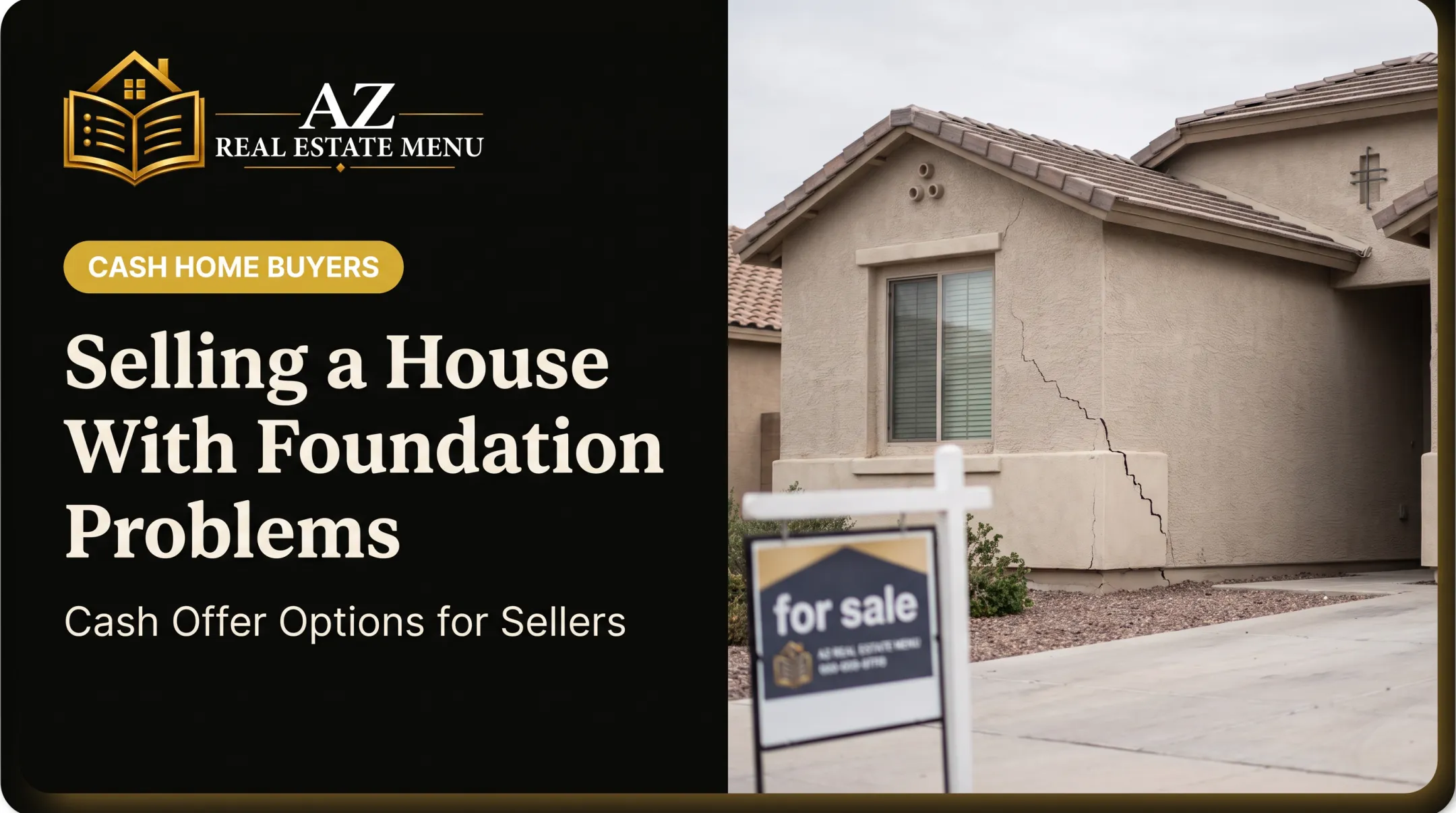
: A Guide](https://file-host.link/website/azrealestatemenu-4i6rs5/assets/refined-images/1790180983907000_0b37089398ea428e8451b924b4c39c72/2x_360.webp)
"Poor condition" covers a lot of ground. It might mean a dated bathroom and worn carpet, or it might mean active water damage, unpermitted additions, or failing electrical systems. The right selling strategy depends entirely on which category you're in.
This guide walks through how to assess your property honestly, weigh repair costs against as-is value, pick the right buyer path, and disclose what you know. The goal isn't the highest sticker price. It's the highest net proceeds with the least risk.
Key Takeaways
- Condition severity, not just age, determines whether retail buyers, renovation-loan buyers, or cash investors are your best audience.
- Get a realistic as-is valuation and repair estimate before deciding to renovate, list as-is, or request cash offers.
- "As-is" describes your repair position, not a shield from disclosure requirements for known material defects.
- Compare offers by projected net proceeds, timeline, and contract risk, not the number on the offer sheet.
How to Sell a House in Poor Condition: A Step-by-Step Guide
Step 1: Classify the Property's Condition
Not every "fixer" is the same fixer. Start by separating cosmetic issues from structural or safety concerns.
Cosmetic and functional issues:
- Worn flooring, outdated fixtures, chipped paint, clutter
- Aging HVAC, older appliances, minor plumbing leaks
- Overgrown landscaping or a tired exterior
Safety, structural, and legal red flags:
- Foundation movement or active water intrusion
- Mold, pest infestations, or unsafe wiring
- Fire damage or unpermitted additions
Fannie Mae's underwriting guidelines classify homes with damage severe enough to affect safety or structural integrity as needing substantial repair before they're eligible for standard financing. That requirement directly shrinks your buyer pool (Fannie Mae, 2025).
Don't diagnose these yourself. Bring in a licensed inspector, structural engineer, or environmental specialist for anything beyond cosmetic wear.

Step 2: Document the Home and Establish an As-Is Value
A pre-listing inspection sounds counterintuitive when you're trying to sell a rough property, but it works in your favor. Written findings let you price accurately upfront instead of getting blindsided during buyer negotiations.
Build your value estimate using two separate numbers:
- As-is value — what the home is worth today, based on comparable sales of similarly conditioned properties nearby
- After-repair value (ARV) — what it could sell for once specific repairs are complete
Then run a simple net proceeds worksheet:
Expected sale price − repair costs − buyer concessions − selling costs − carrying costs = estimated net proceeds
AZ Real Estate Menu's free comparative market analysis can help Arizona sellers weigh as-is value against renovation scenarios before they set a list price.
Step 3: Decide Which Repairs Are Financially Justified
Not every repair pays for itself. Weigh each fix against its actual effect on buyer demand and financing eligibility, not a national average you saw online.
Prioritize in this order:
- Safety and habitability issues — active leaks, exposed wiring, sanitation problems
- Access barriers — anything that keeps a home from being safely shown or inspected
- Cosmetic upgrades — only after the first two are resolved, and only if local comps support the return
Get multiple local contractor bids. National ROI averages, like the ones in annual cost-vs-value reports, vary widely by region and rarely reflect your specific market.
Step 4: Market and Negotiate Transparently
An honest as-is listing beats a dressed-up one every time. Use clear photos, disclose known issues upfront, and lead with genuine strengths, such as lot size, location, or redevelopment potential.
Expect buyer pushback:
- Inspection-driven repair requests
- Appraisal or financing complications
- Questions about permits or title
- Requests for price credits
Set your minimum acceptable net outcome before you review a single offer. Then compare contingencies, earnest money, proof of funds, and closing timelines, not just the top-line number.

When Should You Repair, Sell As-Is, or Choose Another Route?
There's no universal answer here. The right path depends on damage severity, available cash, urgency, and how much showing-and-negotiating fatigue you can tolerate.
Limited repairs before listing often make sense when:
- The home is safe and habitable
- Problems are inexpensive but highly visible (paint, flooring, curb appeal)
- Local comps show a clear price lift for similar upgraded homes
Selling as-is through the MLS fits sellers who:
- Want maximum buyer exposure
- Can tolerate inspections and negotiation back-and-forth
- Have a property with strong location or land value regardless of condition
A direct cash or investor sale makes sense when:
- Speed, certainty, or privacy outweighs chasing top dollar
- You can't fund repairs out of pocket
- Accepting a lower price is worth it to skip months of showings
Whichever path you choose, some situations need extra caution:
- Severe structural or environmental hazards
- Unresolved liens, probate, or tenant occupancy
- Code violations or unpermitted work that could block conventional financing
Get legal and specialist input before you sign anything in these cases.
What You Need Before Listing or Accepting an Offer
Preparation here means reducing uncertainty for you and any potential buyer—not polishing a rough house until it looks flawless.
Condition and Property Records
Gather everything that documents the home's history:
- Inspection reports, contractor estimates, and repair invoices
- Warranties, permits, and insurance claim records
- Utility bills, surveys, and any lease agreements
- Documentation of past water, fire, pest, or environmental events
Verify that additions, pools, solar equipment, or major renovations were properly permitted. Check with your local building authority if you're unsure. Unpermitted work is one of the fastest ways to lose a financed buyer mid-contract.
Pricing and Offer Comparison Inputs
Before you list or accept anything, assemble:
- Recent comparable sales (condition-matched, not just nearby)
- A realistic repair budget
- Estimated selling costs and holding costs
- Your preferred closing timeline
- Your minimum acceptable net proceeds
When comparing a cash offer to a traditional listing, model the likely net proceeds of each path realistically. Don't compare a cash offer to your home's fully renovated value. That apples-to-oranges framing always makes the cash offer look worse than it is.
Legal, Safety, and Disclosure Readiness
Known material defects must be disclosed under applicable state and local rules (NAR consumer guide). Requirements vary by location, so get legal advice on disclosure language, tenants, probate, or other distressed situations.
For showings, address active hazards, restrict unsafe areas, and warn visitors about known risks. A cracked step or exposed wiring isn't just a disclosure issue; it's a liability issue.
Key Parameters That Affect Results When Selling a Poor-Condition House
The number on an offer sheet is only one variable. Here's what actually drives your outcome.
Property Severity and Buyer Financing
Cosmetic issues rarely block financing. Structural, environmental, or habitability problems often do. Fannie Mae's guidelines note that properties with conditions affecting safety or structural soundness typically require repair to a minimum standard before agency financing applies. Lender overlays vary, so don't assume every lender treats a given defect the same way.
Local Demand and Comparable Properties
Neighborhood demand, lot value, zoning, and redevelopment potential all shape how much of a discount buyers expect for condition. National housing inventory sat at 1.62 million homes with 4.9 months' supply as of August 2026 (NAR). Local conditions vary substantially, so lean on recent local comps rather than national averages.

Repair Economics and Carrying Costs
Contractor availability, permit timelines, and insurance costs all affect whether a repair actually pays off. Add these to your calculation:
- Financing costs on any repair loan
- Ongoing utilities, taxes, and maintenance during the repair period
- A contingency allowance for hidden damage (aim for 10-15% above your first quote)
Get multiple estimates. The first quote is rarely the final number.
Offer Terms and Buyer Reliability
A higher offer with weak financing or broad cancellation rights can cost you more time and money than a lower, well-supported one. Compare:
- Proof of funds or pre-approval strength
- Inspection and appraisal contingency scope
- Earnest money amount and release terms
- Assignment rights (common in wholesale cash deals)
- Closing date flexibility and cancellation terms
Common Mistakes and Troubleshooting Issues
Most failed poor-condition sales trace back to a handful of avoidable errors. Zillow's 2025 analysis of unsold listings points to overpricing and mismatched buyer expectations as recurring culprits.
- Skipping the inspection: Leads to unrealistic pricing and mid-contract surprises. Document major problems before you market the home.
- Over-renovating without checking comps: Heavy repair spend that comparable sales don't support cuts your net instead of raising it.
- Hiding defects or vague as-is language: Calling a flawed home "move-in ready" invites failed contracts and legal exposure.
- Accepting the first cash offer blindly: Verify proof of funds, review assignment language, and check cancellation provisions before you sign.
- Assuming a slow listing means it won't sell: Recheck pricing accuracy, disclosure completeness, photo quality, financing restrictions, and showing access before you pull the listing.
Alternatives to a Traditional As-Is Listing
When a house needs work, each selling path trades price, speed, control, and effort differently. Judge options by net proceeds and timeline—not the headline offer alone.
Sell Directly to a Cash Buyer or Investor
This route suits sellers who need a simpler transaction, can't fund repairs, or want to skip repeated showings. Nationally, all-cash purchases made up 38.9% of U.S. home sales in 2024 (ATTOM).
What you give up:
- Typically a lower price than retail market value
- Less market exposure and competitive bidding
- Investor profit margins built into the offer
- Due-diligence periods and assignment clauses to review carefully
AZ Real Estate Menu's Homes 2X program is one version of this path. It buys the home for cash, lets you set the closing timeline, and allows you to stay rent-free while the home is remarketed.
If it resells for more than Homes 2X paid, you receive that upside under the program's full value guarantee.
List with an Experienced Real Estate Professional
This works well when you want broad exposure, competitive offers, and expert help with disclosures and negotiation. It reaches retail buyers, renovation-loan buyers, and investors simultaneously.
Costs and friction to expect:
- Commissions or flat fees, plus standard selling costs
- Showings, inspections, and buyer contingencies
- Typically more time before closing than a direct cash sale
A traditional listing commission is typically 3%. AZ Real Estate Menu's $990 flat-fee listing offers full seller representation through closing—CMA, pricing strategy, and MLS syndication to Zillow, Realtor.com, and 1,000+ sites.

If a buyer's agent is involved, a separate 2% commission typically applies. Confirm current eligibility and terms before relying on specific figures.
Request and Compare a No-Obligation Cash-Offer Review
If you want a speed-and-certainty baseline before committing to repairs or a full listing, a no-obligation cash-offer review gives you a data point without locking you in.
Before you lean on the number:
- The offer may include condition-based adjustments or other costs
- Compare the written net proceeds against at least one market-based alternative before deciding
AZ Real Estate Menu provides no-obligation cash-offer reviews for eligible Arizona property owners. Not every property will qualify or receive a specific offer amount.
Conclusion
Selling a house in poor condition is almost always possible. The outcome depends on accurately identifying what's actually wrong, pricing the home realistically as-is, and choosing between repairs, an MLS listing, or a cash sale based on your actual numbers.
The strongest decision balances net proceeds against speed, certainty, effort, and disclosure risk, not just the highest offer on paper. Before you commit to a direction:
- Get a professional valuation or comparative market analysis
- Compare written offers side by side
- Bring in legal or specialist advice for serious defects or complicated ownership
A free comparative market analysis can put those paths next to each other so you can see which option is likely to net you the most.
Frequently Asked Questions
How much is a distressed property worth?
Value depends on location, comps in similar condition, repair costs, buyer demand, and financing eligibility. Skip the generic discount percentages and get a local comparative market analysis instead.
What is the most common reason a property fails to sell?
Overpricing tops the list, but undisclosed defects, weak marketing, limited buyer financing, and access problems all contribute. Terms that don't match the property's actual condition also scare off serious buyers.
What do you call a house that is falling apart?
"Fixer-upper," "distressed property," and "uninhabitable" aren't interchangeable. A fixer-upper is usually livable but needs major work; distressed often means foreclosure or serious safety issues.
Can I sell a house in poor condition without making repairs?
Yes, most homes can be marketed as-is. You still need accurate disclosures, realistic pricing, safe showing conditions, and a clear understanding of what buyers and lenders will actually accept.
Is it better to repair a house or sell it as-is?
It depends on repair cost, expected value increase, timeline, and available funds. Model projected net proceeds for both scenarios before deciding; the answer changes based on local demand and your specific numbers.